Regulate

A mobile app helping children and caregivers regulate emotions through guided exercises and pattern tracking.

Empathy Design

Research Design

User Flows

Figma

Prototyping

Mobile UX

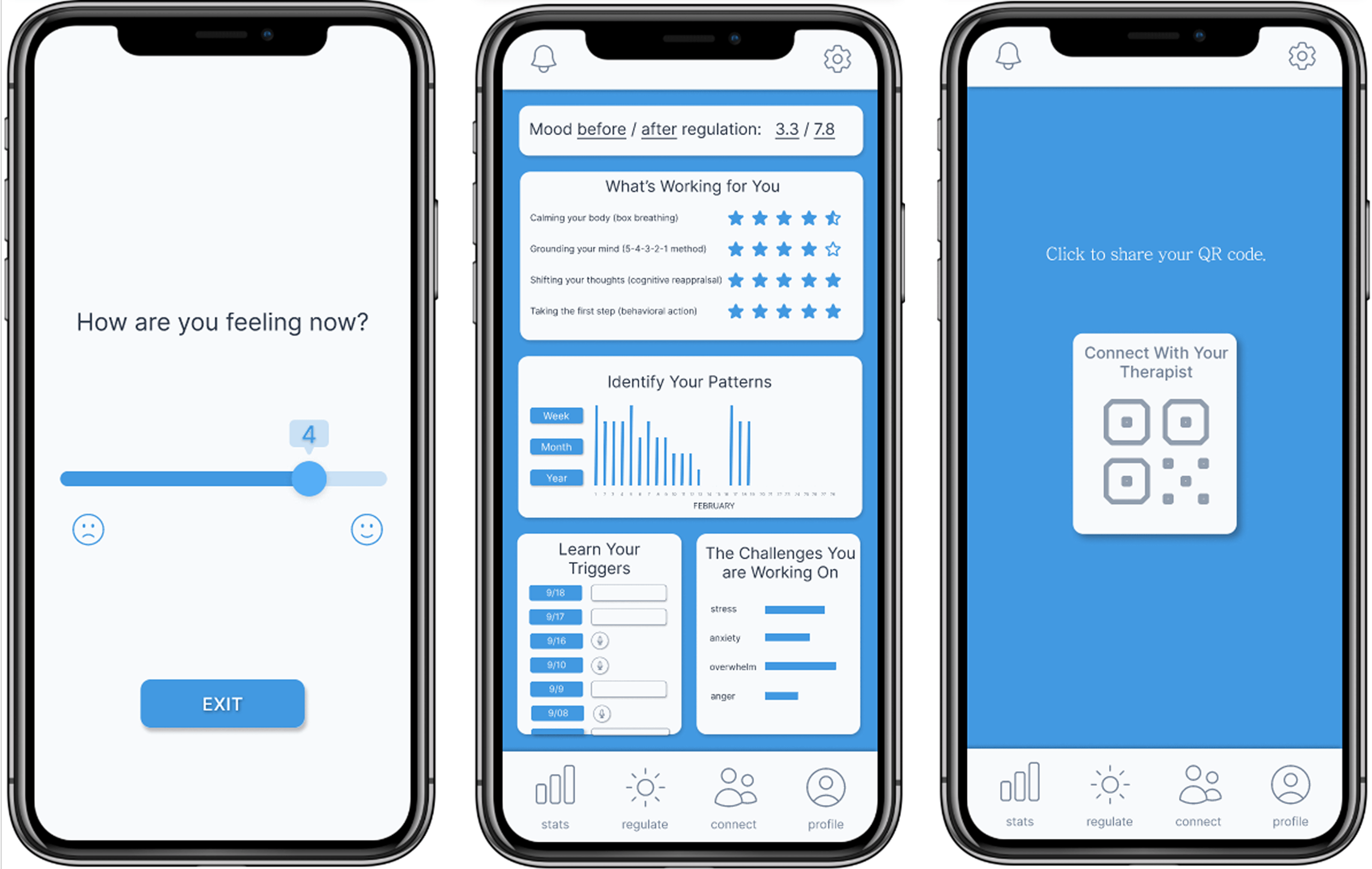
iPhones displaying key Regular App screens

Project at a Glance

Client

Self-directed, grounded in clinical research and personal experience supporting individuals through emotional dysregulation

Role

Solo, research through high-fidelity prototype and user testing

Timeline

1 week

Tools

Figma, Miro, Academic Literature, Clinical Self-Help Resources

Outcome

Four evidence-based intervention flows completed by users in 2 to 5 minutes

Problem

E-commerce platforms are built to convert, and promotional content is a legitimate and proven tool for driving purchase behavior. The challenge is not promotion itself. It is promotional architecture.

Temu's mobile app surfaces promotional content at every stage of the purchase flow simultaneously, from entry overlays through to checkout. When promotion competes with navigation at every step rather than supporting it, the result is increased cognitive load, slower task completion, and higher abandonment rates, particularly among users with ADHD, dyslexia, visual processing differences, or limited technical literacy.

The design question this project set out to answer was not whether to include promotion, but how to structure it so that business goals and user goals are not working against each other.

Goals

  • Design four distinct evidence-based intervention flows: emotional assessment, guided breathing, grounding, and cognitive reappraisal
  • Deliver each intervention in a 2 to 5 minute window without sacrificing clinical grounding
  • Build pattern tracking so users can identify emotional triggers over time
  • Prioritize privacy by default to remove barriers to adoption for users with professional or personal privacy concerns

Contraints

  • Design four distinct evidence-based intervention flows: emotional assessment, guided breathing, grounding, and cognitive reappraisal
  • Deliver each intervention in a 2 to 5 minute window without sacrificing clinical grounding
  • Build pattern tracking so users can identify emotional triggers over time
  • Prioritize privacy by default to remove barriers to adoption for users with professional or personal privacy concerns

Process

5  |  Iterate

Documented opportunities to broaden reach, including adjusted language complexity for younger users and gamification elements for sustained engagement.

1  |  Discover

Studied mobile mental health app effectiveness research, UX best practices for mental health applications, and clinical validation studies for cognitive behavioral interventions.

2  |  Define

Developed the core design question: how to empower adults to build personalized, evidence-based emotional regulation skills that work discreetly in real-world contexts.

1  |  Research

Studied mobile mental health app effectiveness research, UX best practices for mental health applications, and clinical validation studies for cognitive behavioral interventions.

2  |  Define

Developed the core design question: how to empower adults to build personalized, evidence-based emotional regulation skills that work discreetly in real-world contexts.

3  |  Ideate

Explored intervention types through sketching and wireframing, evaluating breathing, grounding, cognitive reappraisal, and behavioral activation as distinct user flows.

2  |  Define

Developed the core design question: how to empower adults to build personalized, evidence-based emotional regulation skills that work discreetly in real-world contexts.

3  |  Ideate

Explored intervention types through sketching and wireframing, evaluating breathing, grounding, cognitive reappraisal, and behavioral activation as distinct user flows.

4  |  Prototype

Developed a high-fidelity interactive prototype demonstrating four core task flows with real-time feedback and progress tracking across each intervention.

3  |  Ideate

Explored intervention types through sketching and wireframing, evaluating breathing, grounding, cognitive reappraisal, and behavioral activation as distinct user flows.

4  |  Prototype

Developed a high-fidelity interactive prototype demonstrating four core task flows with real-time feedback and progress tracking across each intervention.

5  |  Iteration

Documented opportunities to broaden reach, including adjusted language complexity for younger users and gamification elements for sustained engagement.

4  |  Prototype

Developed a high-fidelity interactive prototype demonstrating four core task flows with real-time feedback and progress tracking across each intervention.

5  |  Iteration

Documented opportunities to broaden reach, including adjusted language complexity for younger users and gamification elements for sustained engagement.

1  |  Research

Studied mobile mental health app effectiveness research, UX best practices for mental health applications, and clinical validation studies for cognitive behavioral interventions.

Key Decisions

Limit Every Intervention to a 2 to 5 Minutes

Users in emotional distress need immediate relief, not a commitment. Time-constrained interventions respect the reality of a crisis moment while maintaining clinical effectiveness and encouraging consistent use.

Shorter interventions provide less depth than a full therapy session. The app is designed to complement professional care, not replace it. Accessibility and in-moment support were the primary goals.

Offer Four Distinct Techniques

Users have different regulation preferences and different situational needs. Breathing works for one person, grounding for another. Offering four validated options lets users discover what works for them personally, which research shows significantly impacts regulation success.

More options create initial complexity. The personalization and user agency justified the learning curve.

Make Privacy the Default, Not an Opt-in

Mental health stigma and professional concerns are active barriers to app adoption. Ensuring complete privacy by default, with optional healthcare provider sharing, addresses the most significant barrier identified in the research.

Privacy-first architecture limits some analytics and community features. User trust and adoption among the primary audience outweighed social engagement features that could deter the people who need the app most.

Design Solutions

Thirty Seconds to a Personalized Intervention

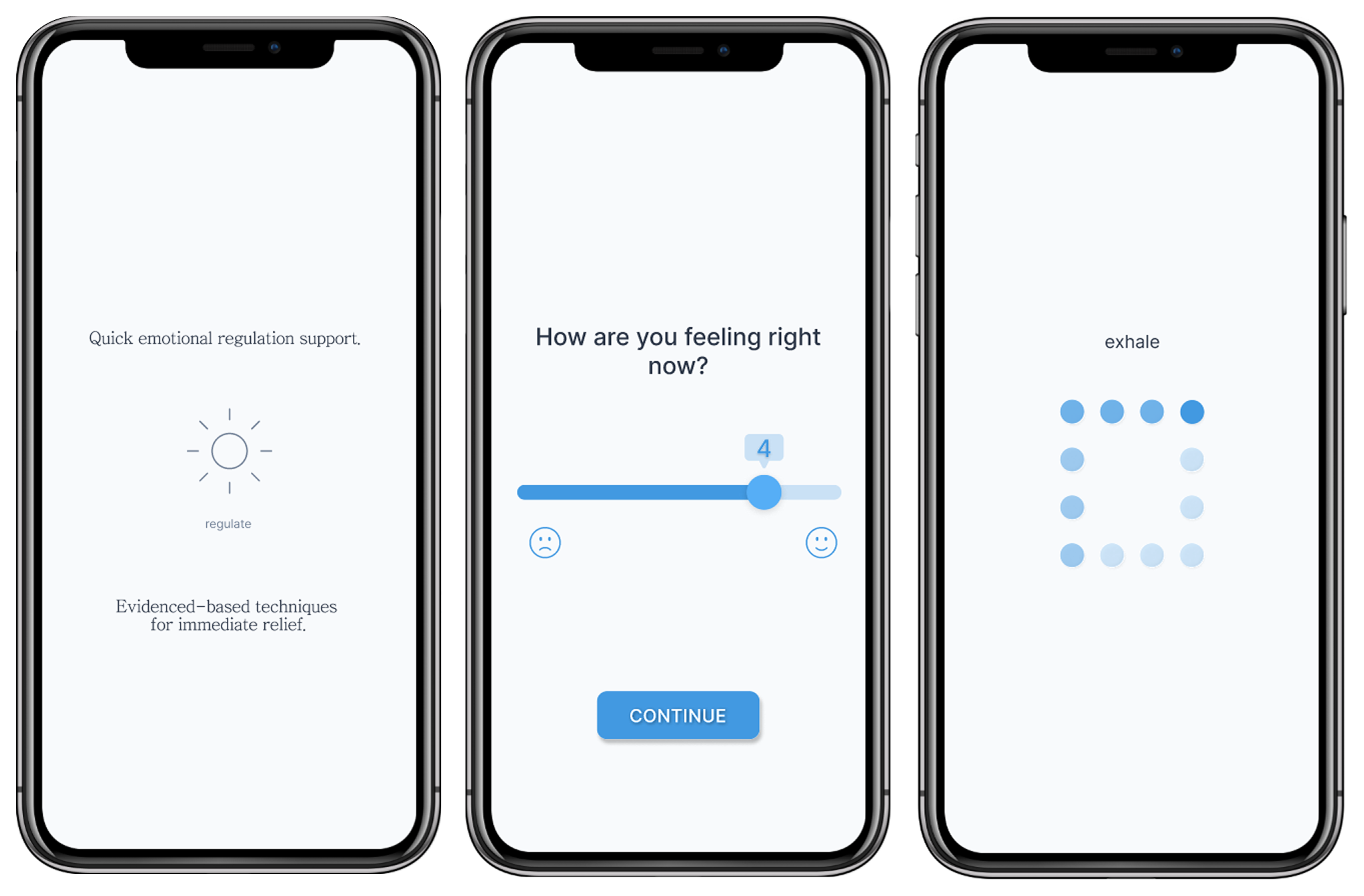
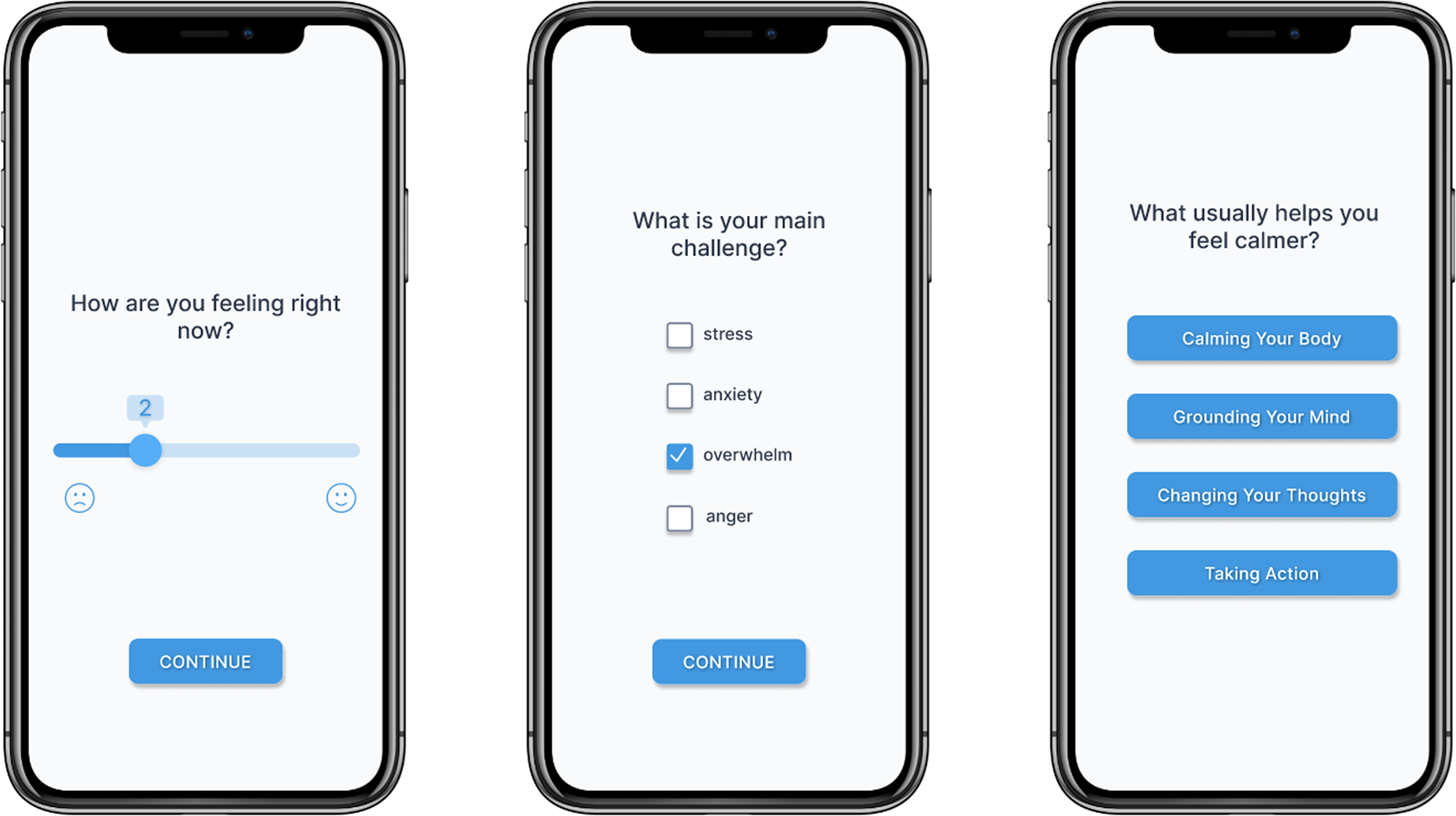
A 1 to 10 intensity slider, challenge type selection, and technique preference icons route users to the right intervention immediately. No lengthy intake, no unnecessary friction at the moment of highest need.

3 iphone showing the initial screens of Regulate - showcasing the immediate intervention

Evidence-Based Physiological Regulation in 2 Minutes

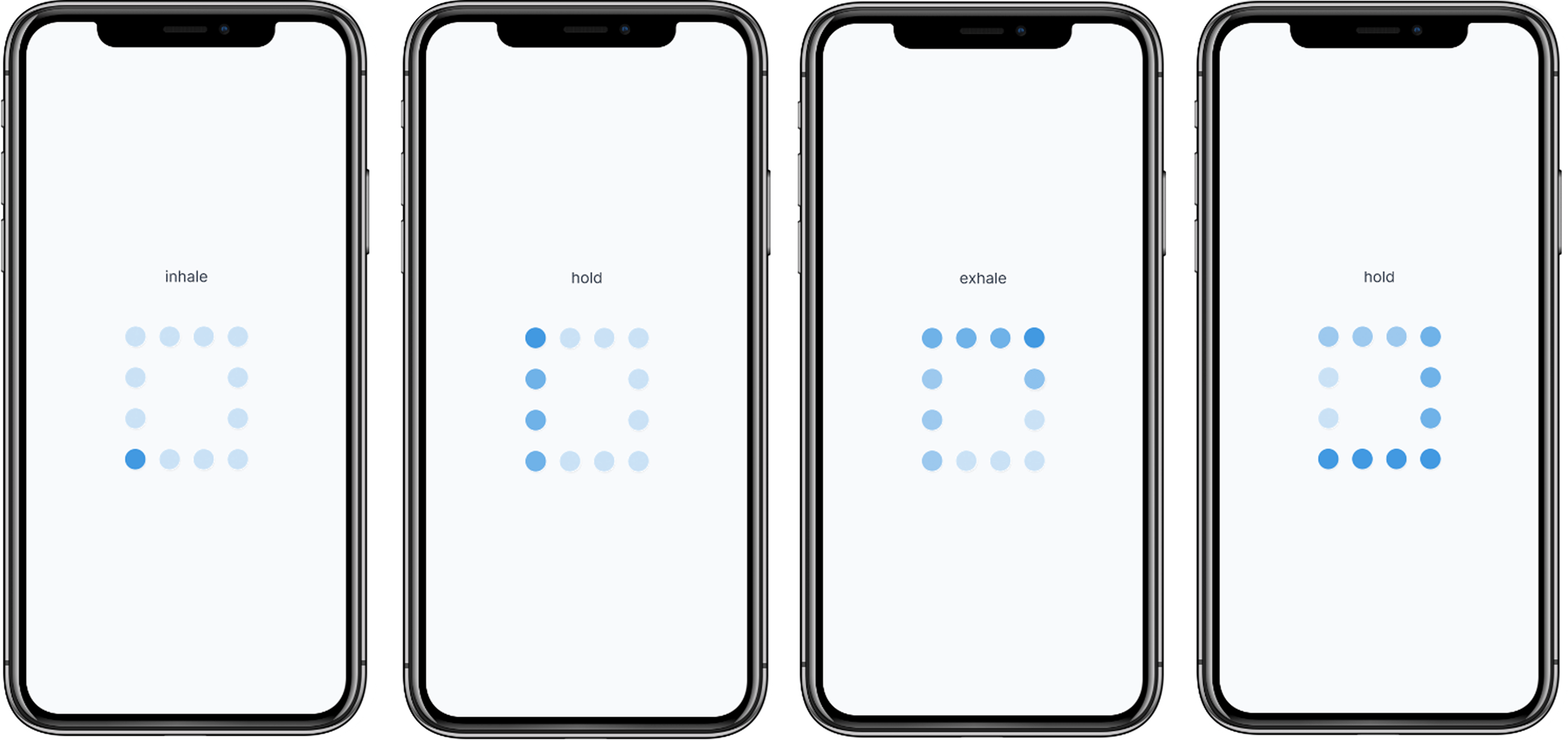
A visual breathing animation guides users through the box-breathing technique with a progress indicator and mid-point check-in. The calming color palette reinforces the intervention without competing with it.

4 iphones showcasing the box breathing animation

Present-Moment Awareness for Anxiety Relief

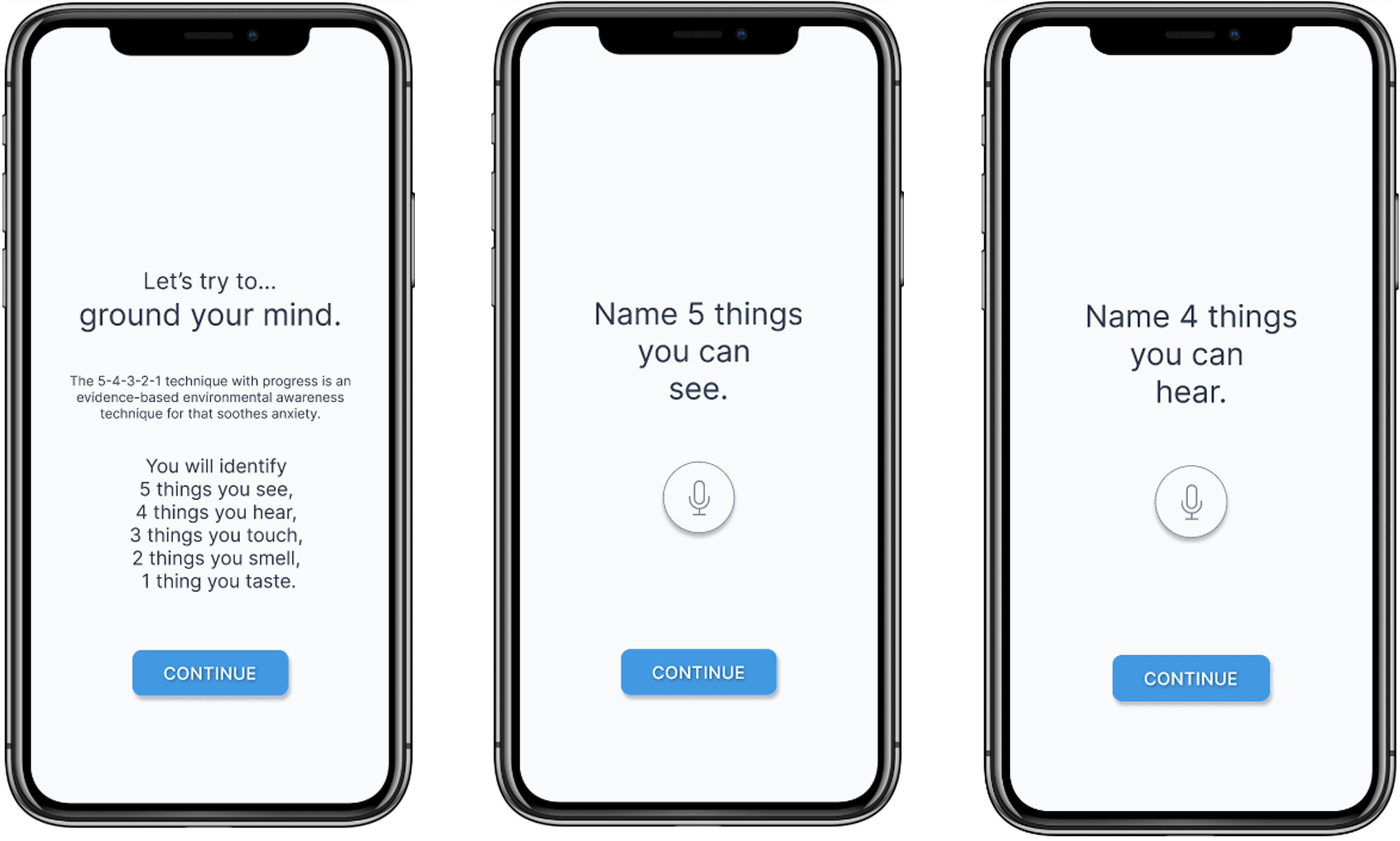
The 5-4-3-2-1 grounding exercise uses progressive prompts across all five senses with visible progress tracking. It works in any environment and requires no prior experience with the technique.

3 iPhones showcasing Regulate's 5-4-3-2-1 grounding exercise design

Transform Thought Patterns in Real Time

Situation input, an emotion rating slider, and guided reframing questions walk users through perspective-shift techniques drawn directly from cognitive behavioral therapy. The structure makes a clinical intervention feel accessible.

3 iphone screens showcasing the Regulate pattern tracking technique, dashboard, and ability to share patterns with a therapist

Outcomes

Interventions Completed in 2 to 5 Minutes

All four task flows were validated within the target time window, meeting the primary constraint without compromising the clinical structure of each technique.

Four Evidence-Based Techniques Delivered

Breathing, grounding, cognitive reappraisal, and emotional assessment flows, each grounded in clinical research and designed for independent use without professional guidance.

Designed for the gap in the market

No existing app delivers targeted, evidence-based intervention for emotional dysregulation with this level of clinical grounding and UX accessibility combined.

What This Project Confirmed

Following the research process prevented premature solution-jumping. The instinct at the start of the project was to jump straight to a breathing exercise screen. The research revealed that emotional assessment needed to come first, that routing users to the right technique mattered as much as the technique itself.

Grounding the design in clinical literature changed the quality of every decision. When a choice could be traced back to a validated framework, the rationale was clear and the tradeoffs were easier to evaluate.

If I were to continue this project, I would add gamification elements and simplified language for younger users. The current design serves adults effectively. Adolescents managing anxiety and depression represent an underserved group with the same need, and the intervention structure would translate with targeted adjustments.

This is a self-directed project grounded in clinical research and years of firsthand experience supporting students, family members, and individuals through emotional dysregulation. The problem is real. The gap in the market is documented. The design reflects both.